

Lets delve into each era of Thailand’s fashion for the past 100 years, exploring significant cultural shifts, key figures, and notable trends that shaped the evolution of Thai attire from the early 20th century to the present day.
Early 20th Century: Tradition and Elegance
In the early 1900s, Thai fashion was deeply rooted in tradition, with clothing styles reflecting social status and regional differences. Women typically wore the “phaa nung” or “chong kraben,” a traditional wrap-around skirt, paired with a finely embroidered blouse. The “sabai,” a fabric draped elegantly over the shoulder, completed the ensemble. Men’s traditional attire included the “pakama,” a versatile cloth that could be styled in various ways, and a simple shirt.
The royal court had a significant influence on fashion, with elaborate and intricately designed garments reflecting the wearer’s status. Royal attire often featured luxurious fabrics like silk, adorned with gold and precious gems, underscoring the opulence of the Thai monarchy.

1930s to 1940s: Western Influence and Modernization
During the reigns of King Rama VI and King Rama VII, Thailand experienced a wave of modernization, which included changes in clothing styles. The government encouraged the adoption of Western attire as part of its modernization efforts. Men began wearing suits and trousers, while women embraced skirts, blouses, and dresses, blending these new influences with traditional Thai elements.
This era also saw the introduction of uniforms in schools and government institutions, further promoting the shift towards Western-style clothing. However, traditional attire remained popular for formal occasions and in rural areas, maintaining a connection to Thai heritage.

1950s to 1960s: The Rise of Thai Silk
The mid-20th century marked the renaissance of Thai silk, largely due to the efforts of Jim Thompson, an American entrepreneur who revitalized the Thai silk industry. Thai silk, known for its quality and distinctive designs, became a symbol of national pride and a sought-after commodity worldwide.
This period saw a resurgence of traditional attire, now made with luxurious Thai silk, blending traditional styles with modern aesthetics. Women’s fashion included silk phaa nung and elegant blouses, while men’s attire incorporated silk shirts and traditional lower garments.

1970s to 1980s: Economic Boom and Diversification
Thailand’s economic boom led to significant changes in the fashion industry. Urbanization and the rise of the middle class introduced a more diverse fashion landscape. The 1970s and 1980s witnessed a blend of traditional and modern styles, with Thai designers beginning to make their mark.
The influence of international fashion became more pronounced, with Thai consumers gaining access to global trends through media and travel. Despite this, traditional elements remained integral to Thai fashion, with designers incorporating local textiles and motifs into contemporary designs.
1990s to 2000s: Globalization and Fashion Fusion
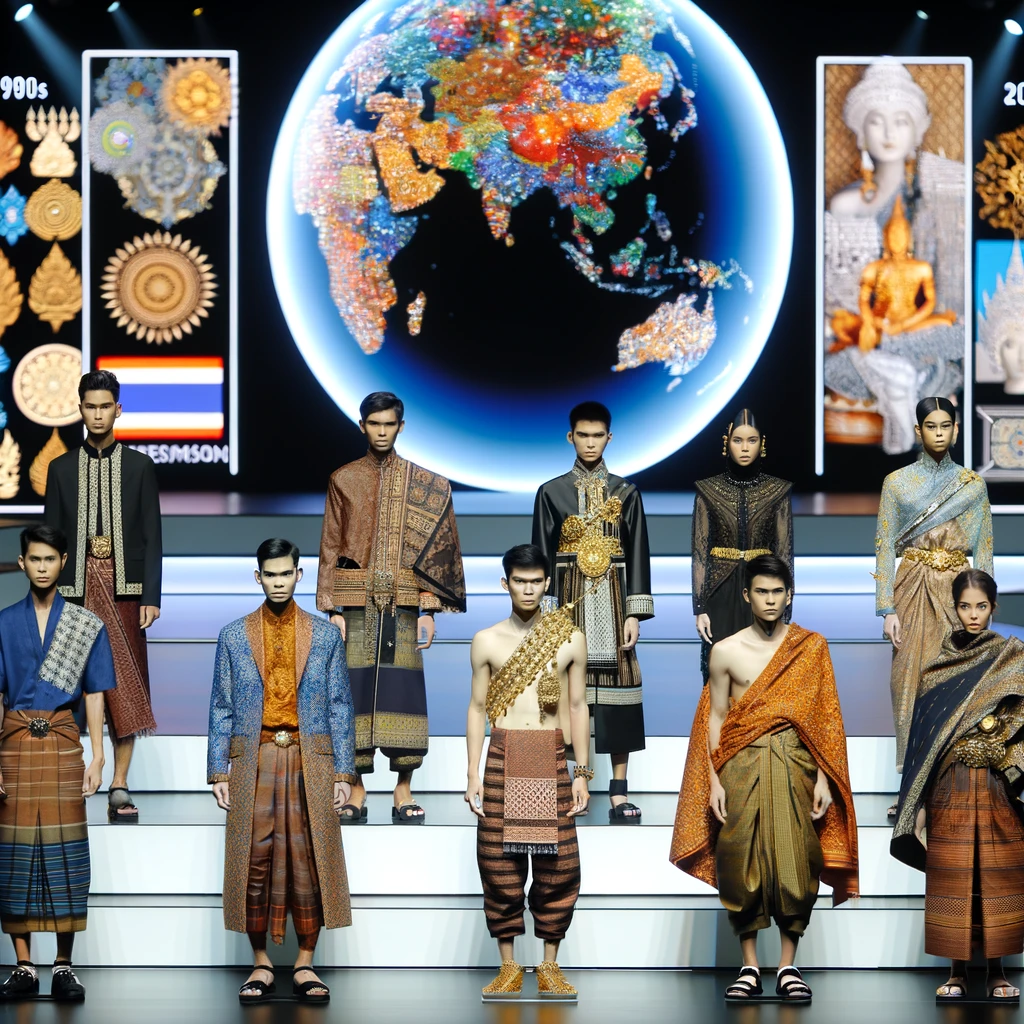
The late 20th and early 21st centuries saw the effects of globalization on Thai fashion. International brands entered the market, and Thai designers gained recognition both domestically and internationally. Fashion shows and weeks in Thailand showcased the country’s talent, highlighting a fusion of traditional and modern styles.
Designers experimented with materials, cuts, and designs, creating a unique Thai aesthetic that resonated on the global stage. Traditional attire continued to evolve, incorporating modern influences while maintaining a connection to Thai heritage.

2010s to Present: Sustainable Fashion and Digital Influence
In recent years, there has been a growing emphasis on sustainability in the Thai fashion industry. Designers and brands are focusing on eco-friendly practices, using local materials, and preserving traditional craftsmanship. The rise of digital media has transformed fashion, with online platforms, social media, and influencers playing a crucial role in shaping trends and consumer behaviour.
Today, Thai fashion is a dynamic blend of tradition and innovation, reflecting the country’s rich cultural heritage and its embrace of global trends. The industry continues to evolve, with a focus on sustainability, digital innovation, and a deep respect for traditional craftsmanship.
Leave a Reply